A uranium strategy on Robinhood Chain with a prospecting game underneath it. Every round opens a field of 25 claims. One of them holds the strike.
$USR pairs with USDGon
 Ponsand settles on
 Robinhood Chain
Twenty-five claims.
One strike.
Each round lays a fresh five-by-five survey over new ground. Put your attempts on the plots you like. When the clock runs out, a public commit-and-reveal draw picks the one claim that holds the deposit, and everyone who prospected it splits the round's rewards by attempts.
The shading on each plot is the crowd. A busy claim pays less per attempt if it hits. An empty one pays you the lot.
- Barren
- Nothing in the core sample.
- Trace
- Borders the deposit. Readings, no ore.
- Ore
- The strike. Pays the round's reward pool.
- High-grade ore
- A rich strike. Pays 2.5× the pool.
- Motherlode
- Rare. Pays the pool plus the whole motherlode pot.
2 claims selected: B3, C3
2 in 25: a 8% chance one of them holds the strike. Test field, nothing is staked.
A round, from open to strike.
Rounds run back to back, all day. Each one is self-contained: funded before it opens, drawn in public, settled in the same transaction that picks the strike.
- 1
The field opens
A field is always open. Its clock starts with the first claim, and the reward pool is already funded from trading fees before anyone stakes.
- 2
You stake claims
Spread attempts across as many plots as you like, or stack them on one. You can add more until the clock hits zero.
- 3
The strike is drawn
The operator reveals a secret it committed to before the round opened. The contract mixes it with a fresh block hash, and the result maps to one claim. All of it is published.
- 4
Rewards settle
Everyone on the winning claim splits the pool in proportion to their attempts, sent straight to their wallets. If nobody staked it, the pool rolls into the next round.
- Strike
- C4, high-grade ore
- Reward pool
- 312 USDG
- Attempts staked
- 471
- Winning prospectors
- 6
- Paid out
- 780 USDG
- Randomness seed
- 0x9f3c42a8…7be0e21a
You never pay to enter.
Nobody deposits ETH or USDG for a chance at a prize, and staking costs no gas: your claims are relayed for you. Rewards come out of trading fees. Attempts are earned by holding $USR. You keep the tokens; nothing is spent.
Every round leaves a receipt like this one: the pool, the attempts, the randomness seed and the settlement transaction. You can check any of them against the chain yourself.
Fees go in. The reserve goes up.
$USR trades against USDG. Every trade pays a creator fee, and that fee is the protocol's only income. All of it is routed onchain, to three places you can watch.

USR / USDG pool
Launched on  Pons
Pons
A creator fee is taken from each trade and swept to the vault.
Reserve vault
Public, onchain
50%
Reserve vault
USDG and ETH held as base reserve

20%
Nuclear exposure
NNE today, xU3O8 once approved


30%
Round rewards
Funds every round's prize pool
The split shown is indicative. The final routing is fixed in the vault contract before launch.
Real uranium exists onchain.
xU3O8 is a token from uranium.io that represents ownership interests in physical U₃O₈ held through a regulated custody structure. It is the asset this reserve is named for. There is one catch, and the plan is built around it.
What the reserve holds
- USDG and ETH base reserveHeld in the vault, visible onchainAt launch
- Nuclear-sector exposureNNE stock token, where the reserve is eligible to hold itAt launch
- Round rewardsFunded from fees before each round opensAt launch
V1 makes no claim to hold uranium. It builds a dollar and ether reserve, takes sector exposure where it can, and pays the game.
Chain of custody
 uranium.io
 Curzon Uranium sources the physical U₃O₈
Cameco stores it at a licensed facility
Archax holds it in trust for token holders
 xU3O8 on Etherlink represents a share of that uranium
USR reserve wallet holds xU3O8 once approved
The catch: xU3O8 can only sit in approved venues or whitelisted wallets. So players are paid in USDG or ETH, and the uranium stays in the reserve, where anyone can verify it.
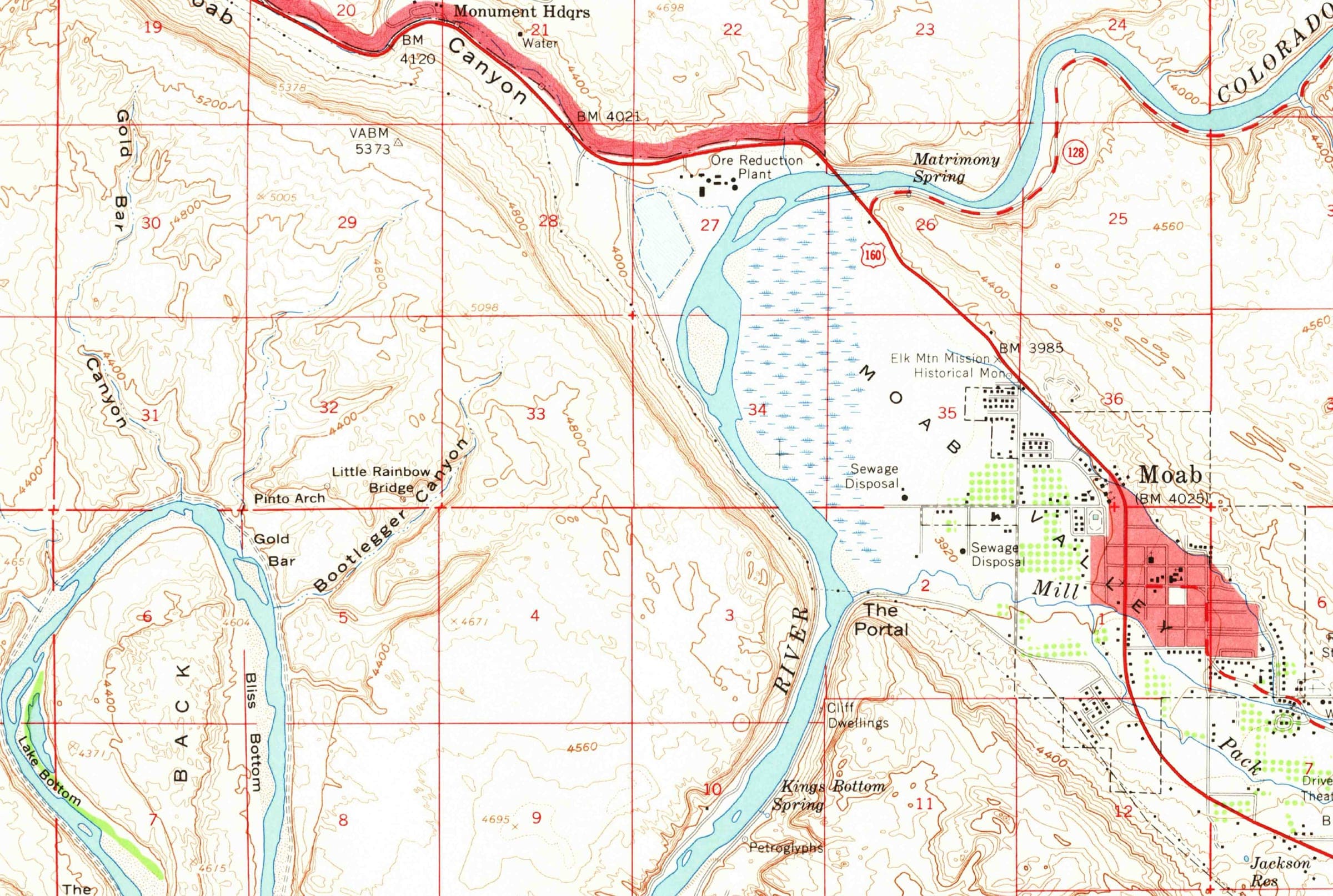
Map: U.S. Geological Survey, Moab quadrangle, Utah. The ore reduction plant on the river bend is the Moab uranium mill, which processed Colorado Plateau ore from 1956 to 1984.
 Why not pair with NNE?
Nano Nuclear Energy trades as a stock token on Robinhood Chain, and a USR/NNE pair would suit the theme. But Pons doesn't accept NNE as a pairing asset today, and its onchain market is thin next to the large stock tokens. So the reserve can hold NNE. The pair stays USDG, where the liquidity is.
Fair questions.
The short version: it's free to prospect, the draw is public, and the reserve only claims what it can prove.
Stake your first claim.
Connect a wallet, pick your ground, and see what the survey turns up. It costs nothing to prospect.
Launch app